The lessons in our humble opinion:
In the fast-moving world of digital marketing, change is not a disruption; it is the operating system. Platforms evolve, algorithms shift, consumer behavior transforms overnight, and what worked yesterday may become irrelevant tomorrow.
That is why the lessons from Who Moved My Cheese? remain surprisingly relevant, not just for business strategy, but for mental resilience, workplace performance, and emotional well-being.
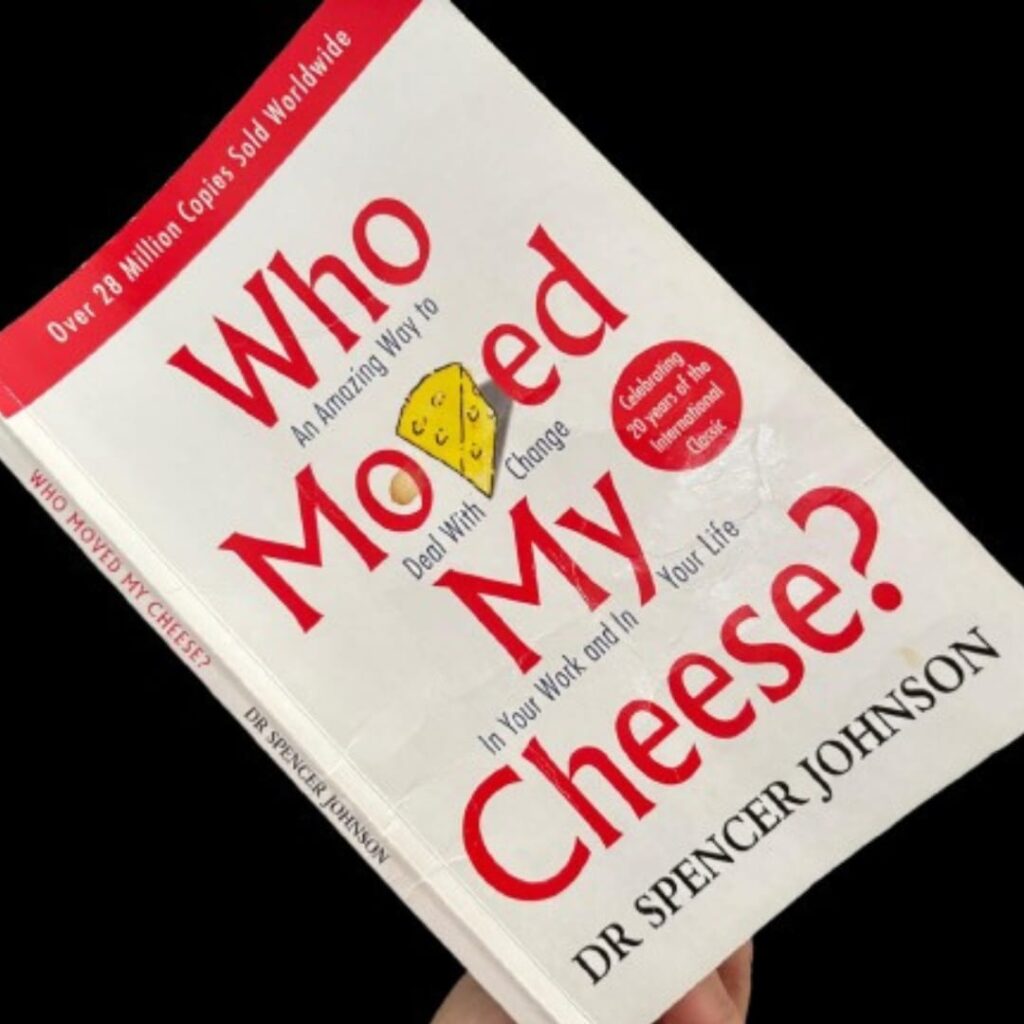
At its core, the book is a simple parable about two mice and two “little people” navigating a maze in search of cheese, which represents success, security, or happiness. When the cheese moves, each character reacts differently. That reaction becomes the entire story.
From a modern workplace and mental health lens, the message is clear:
Change is inevitable. The only variable is how we respond.
Change Is Inevitable; Resistance Is Optional
One of the most important truths in both business and life is that change will happen whether we accept it or not.
Markets shift. Relationships evolve. Roles change. Technologies disrupt entire industries. The organizations and individuals who struggle most are often not those facing change, but those resisting it.
Denial does not delay change; it only extends suffering. Acceptance, on the other hand, creates space for clarity. The faster we accept reality as it is, not as we wish it to be, the faster we regain control over our response.
Adopt a Growth Mindset in Uncertain Times
A growth mindset reframes disruption as opportunity.
Instead of asking: ” Why is this happening to me? “
We begin asking: ” What can this teach me? “
In high-pressure environments, this shift is critical. Stress often comes not from the situation itself, but from our interpretation of it.
When change is viewed through a growth lens, uncertainty becomes possibility. New skills, new directions, and new opportunities begin to appear where only problems were visible before.
Don’t Take Yourself Too Seriously; Take the Situation Seriously
One of the most underrated tools for resilience is the ability to laugh at oneself, not to dismiss responsibility, but to remove ego from the equation.
Many people suffer not because of failure itself, but because of their attachment to how they are perceived. Flexibility requires humility:
- Acknowledge mistakes without self-judgment
- Learn without self-punishment
- Adapt without emotional resistance
The most effective professionals are not rigid perfectionists; they are adaptable learners.
Activity Is Not the Same as Productivity
In digital industries, busyness is often mistaken for effectiveness. However, there is a clear difference:
- Activity is movement
- Productivity is meaningful progress
It is easy to stay busy while moving in circles. True success comes from clarity of direction, not volume of effort.
Staying focused on high-impact actions and regularly reassessing priorities is essential in both business and personal development.
Stay Consistent, Even When Things Improve
One of the most common traps after success is comfort. When things are going well, people often slow down, assuming stability will continue. But in a constantly evolving environment, stability is temporary.
Success is not a destination; it is maintenance.
Those who sustain success are not those who reached it first, but those who continued evolving after reaching it.
Arrogance Is the Beginning of Decline
Confidence builds progress. Arrogance blocks it.
Confidence says: ” I can learn and improve. “
Arrogance says: ” I already know enough. “
The difference determines long-term adaptability. In both corporate environments and personal growth, humility is not weakness; it is strategic awareness.
Emotional Control Creates Clarity
When emotions take over, perspective becomes distorted. Stress, frustration, and fear can lead to:
- Overreaction
- Misjudgment
- Avoidance behavior
- Burnout
Resilience is not emotional suppression; it is emotional regulation. It is the ability to remain engaged, even when withdrawal feels easier.
In Business and Careers, Adaptation Wins
In corporate environments, the principle is straightforward: companies that adapt quickly to new technologies, market trends, and customer needs survive, while those that fail to do so eventually fade.
The same applies to employees. Those who resist change often become bottlenecks, while those who embrace it become catalysts. Importantly, adaptation does not always mean changing jobs; it often means changing approach.
- Learning new tools
- Updating outdated methods
- Reframing responsibilities
- Expanding skill sets
Growth rarely requires escape. More often, it requires evolution.
Relationships Also Require Personal Change
Change is not only external; it is deeply internal.
In relationships, the mistake many people make is trying to change the other person. However, sustainable improvement often begins with self-adjustment:
- Adjusting communication style
- Letting go of outdated behaviors
- Improving emotional awareness
- Choosing response over reaction
Sometimes, “new cheese” is not a new relationship; it is a new version of yourself within the same relationship.
Let Go of the Past to Access the Present
Holding onto what no longer exists creates emotional stagnation. The past can inform us, but it should not anchor us. Acceptance allows movement. Denial creates repetition. The key question becomes:
“ Am I focused on what I lost, or what I can still gain? “
Your answer determines your direction.
Resilience Is Small, Consistent Action
During stress, the instinct is often to shut down completely. But resilience is not dramatic; it is incremental. It looks like:
- Showing up when it is uncomfortable
- Taking one small step instead of none
- Staying engaged instead of withdrawing completely
Consistency is what transforms instability into progress.
Expect Change; Do Not Be Surprised by It
One of the most practical mental models is simple: assume change is always coming. When change is expected, it stops being a crisis and starts becoming a condition of life. This mindset:
- Reduces anxiety
- Improves decision-making
- Enhances adaptability
- Strengthens emotional stability
Simplicity often outperforms over-analysis.
Final Thoughts: The Real Message Behind Who Moved My Cheese
At its heart, Who Moved My Cheese? is not about cheese. It is about mindset.
Change will always move the “cheese” in careers, relationships, industries, and life itself. The real question is not whether it moves, but whether we are willing to move with it.
Those who thrive are not those who avoid change, but those who:
- Accept it early
- Learn from it quickly
- Adapt without resistance
- And keep moving forward with grace
Because in the end, life does not reward certainty. It rewards adaptability. And in a world that never stops changing, adaptability is the most valuable skill of all.